The mid 90’s witnessed an emergence of the underground music scene which focused on social commentary most notably featuring the hardships of the black community evident in the east coast vs. west coast gangster rap, and apathetic angst-filled grunge rock. With the exception of R&B and dance pop, the music of the 90’s was male dominated but it wasn’t just the boys who had something to complain about.
No Doubt, a California based band released “I’m Just A Girl” in 1995, an upbeat ska sound, very different from the average gloomy grunge of of the time, written by singer, Gwen Stefani about her resentment for female stereotypes. The title of the song alone is packed with animosity. Rather than saying, “I’m a girl” which in reality embodies a variety of qualities, saying, “I’m just a girl,” is like trying to justify the classification of all women into one certain type. “Just” a girl is degrading. Simply using the word “just” in the title exemplifies how women are thought of as a “typical prototype.” The word “just” embodies Stefani’s sarcasm used throughout the song and the catchy tune demands to remain in your head.
The lyrics in the first verse introduce Stefani’s complaint that “this world is forcing me to hold your hand,” meaning that as a woman, she cannot be fully independent. The chorus is sarcastic, saying, “I’m just a girl, little ‘ol me/ Don’t let me out of your sight/ I’m just a girl, all pretty and petite/ So don’t let me have any rights.” Her sarcasm makes fun of the male notion of having to protect women as if they were all frail and fragile beings unable to fend for themselves.
“Oh...I’ve had it up to here!/ The moment that I step outside/ So many reasons/ For me to run and hide/ I can’t do the little things I hold so dear/ ‘Cause it’s all those little things/ That I fear.” These lyrics portray the warnings women constantly hear. Women are taught to be afraid of doing casual things alone because being female, according to men, somehow makes one more vulnerable to the supposed dangers of the world so women couldn’t possibly leave the house without the threat of trouble.
“I’m just a girl, I’d rather not be/ ‘Cause they won’t let me drive/ Late at night. I’m just a girl/ Guess I’m some kind of freak/ ‘Cause they all sit and stare/ With their eyes.” In an interview with BAM Magazine, Stefani said, “I wrote that because my dad got mad at me for going to Tony [Kanal, No Doubt bassist]'s house and driving home late at night. I mean, c'mon, I'm, like, going on 30 here! I wouldn't trade [being female], but I really don't think guys understand what a burden it can be sometimes.”
Throughout the rest of the song, Stefani states that girls are “typical prototypes” because “that’s all that you’ll let me be.” By the end, Stefani leaves sarcasm behind and calls out men with full force repeating, “I’ve had it up to here!” shouting along with the fast paced music like a pissed off girl who is done with being treated like a porcelain doll. The progression from a slow, catchy tune and relaxed, mocking voice to shouting, repeating, and faster music depict Stefani’s decrease in tolerence and she has finally exploded.
While American girls can easily identify with the song, No Doubt’s music video speaks more to the personal struggle Stefani has faced being the only female member of a rock band. The video begins with the band packing up cars to presumably go on tour with Stefani shown in the backseat between two band members. Further, the band is shown in a hotel where two rooms are separated by a wall. The men are packed in one room while Stefani is alone with two bodyguard-like maids in the other. Quick flashes of the rooms depict the symbolic differences between males and females. The men's room is a dark and gray restroom with urinals on the back wall and Stefani’s room is brightly colored and has beautiful bouquets of flowers and fruit baskets.
The men take out their equipment and begin playing together while Stefani sings alone. Eventually, the men's room becomes a party with dancing and socializing and Stefani remains alone until quick flashes of women applying make up appear and later join Stefani in her room. The video ends when both parties collide and men and women are playing music and dancing together.
In the male dominated music scene of the mid 90’s, especially within the rock genre, Stefani had faced the difficulty of being seen as an equal to men. “I’m Just A Girl” uses sarcasm to poke fun of the male-mindedness in rock, exposes women’s exasperation over gender stereotypes, and helped paved the way for future female rockers.
November 27, 2011

November 13, 2011
TV Analysis- Parks and Recreation
It’s pretty commonly known that blonde girls are ditzy, black guys are great rappers, Asians are geniuses, white men are nerds, Latina women are tough, and gay men can and should make-over your house and your wardrobe. Right? I mean, I see it all over TV so it has to be true, right?
Television and media in general exploit all kinds of stereotypes to help tell a story because stereotyping is a great tool for the audience to understand a character’s “type” without actually having to explain it. The problem with typecasting roles and stereotypical characters is it blinds audiences to the complexities of the regular human personality. This encourages the general public to apply misleading stereotypes in real life which can possibly lead to discrimination. Gender stereotyping, for example, is evident throughout television history because the roles we constantly see women portraying are one-dimensional; meaning, women are often seen as a family member, a victim, a love interest, desperate for love, or a force in the workplace, where those are their one and only characteristic.
In 2009, NBC launched a new comedy, Parks and Recreation, destroying any racist or sexist stereotypes there could possibly be all while bringing the audience knee slapping laughter. Shot in a single-camera mockumentary style, Parks and Recreation is set in Pawnee, Indiana, and focuses on the employees of a branch office of the city government.

Amy Poehler stars as Leslie Knope, a highly ambitious and hardworking woman whose ultimate goal in life is to be the first female president of the United States. Leslie is clearly a feminist with something to prove to “politics as usual.” She takes charge, she is highly organized, she is the go-to-girl to get things done. Poehler plays Leslie’s character as an overachiever however, the writers of the show have not succumbed to the feminist stereotype allowing Poehler to portray Leslie also as an endearing woman who cares about her friends and her town. Leslie is a woman, like any other, with insecurities and interests outside the workplace that Poehler exposes in a hilarious way.


In perfect contrast to Leslie Knope, Ron Swanson, played by Nick Offerman, is a mustache wearing, wilderness loving, manly man. Ron, the director of the Parks and Recreation department is a libertarian and believes in as little government as possible. The irony of this character is further portrayed by his relationships with women. Ron Swanson can eat all the bacon and eggs you have but when it comes to his ex-wife, Tammy number one or his other ex-wife, Tammy number two, he is whipped. Ron and Leslie’s friendship is an example of crushing gender stereotypes throughout the series. Ron has no problem with strong women, in fact, he is attracted to them while Leslie is not intimidated by Ron’s masculinity but she isn’t too proud to seek his advice either.


Parks and Recreation dedicated the majority of one recent episode solely to address the issues of gender equality by overdramatizing Leslie’s feminist ideals and Ron’s masculine standards. In this episode, the two characters are leaders for a boy/girl scouts-like group of children. Ron and the Rangers boys are focused on learning survival skills and how to live in the wilderness but much to the boys dismay, they are not having as much fun as their counterparts, the Pawnee Goddesses who work together to earn badges for best blog or for cooking a homemade meal, making s’mores and having pillowfights.
Leslie created the Pawnee Goddesses because girls were not allowed in the Rangers and when one of the boys opts to leave the Rangers to join the Goddesses, Leslie turns him away. The girls question their leader and request a public hearing discussing Brown vs. The Board of Education. The result is that the boys are allowed to join the Goddesses and in the end, a new group is formed: the “most hardcore wilderness group,” for boys and girls who “march to the beat of their own drum, and made the drum themselves.”


“This episode revealed some revolutionary concepts in the backwards world of girls on television: Girls can fish and play in the woods, and girls can throw a puppy party and a s’more competition. They can be smart and silly, tough and sensitive. They can be a Goddess and a Ranger. And boys can too—one of the best parts of this episode was that the boys weren’t afraid to join a group of Goddesses if it meant they could eat candy and hug puppies and hang out with their new friends. There was no flirting or rampant cooties, just kids having fun together” (Moshenberg).
The writers of Parks and Recreation shatter sexist stereotypes with clever irony and humor within just these two characters Ron and Leslie. What is so impressive about Parks and Recreation is that while it is a scripted, fictional sitcom, the characters showcase more easily identifiable traits than seen on most Reality Television, the mainstay of the mediums productions and the supposed mirror of ourselves. Not only does this show give you a belly full of laughs but it allows the audience to learn that people do not simply fall into a “type.” It is admirable and refreshing when someone can watch this show and be fully entertained while exposed to the complexities of individual personalities.
Television and media in general exploit all kinds of stereotypes to help tell a story because stereotyping is a great tool for the audience to understand a character’s “type” without actually having to explain it. The problem with typecasting roles and stereotypical characters is it blinds audiences to the complexities of the regular human personality. This encourages the general public to apply misleading stereotypes in real life which can possibly lead to discrimination. Gender stereotyping, for example, is evident throughout television history because the roles we constantly see women portraying are one-dimensional; meaning, women are often seen as a family member, a victim, a love interest, desperate for love, or a force in the workplace, where those are their one and only characteristic.
In 2009, NBC launched a new comedy, Parks and Recreation, destroying any racist or sexist stereotypes there could possibly be all while bringing the audience knee slapping laughter. Shot in a single-camera mockumentary style, Parks and Recreation is set in Pawnee, Indiana, and focuses on the employees of a branch office of the city government.

Amy Poehler stars as Leslie Knope, a highly ambitious and hardworking woman whose ultimate goal in life is to be the first female president of the United States. Leslie is clearly a feminist with something to prove to “politics as usual.” She takes charge, she is highly organized, she is the go-to-girl to get things done. Poehler plays Leslie’s character as an overachiever however, the writers of the show have not succumbed to the feminist stereotype allowing Poehler to portray Leslie also as an endearing woman who cares about her friends and her town. Leslie is a woman, like any other, with insecurities and interests outside the workplace that Poehler exposes in a hilarious way.
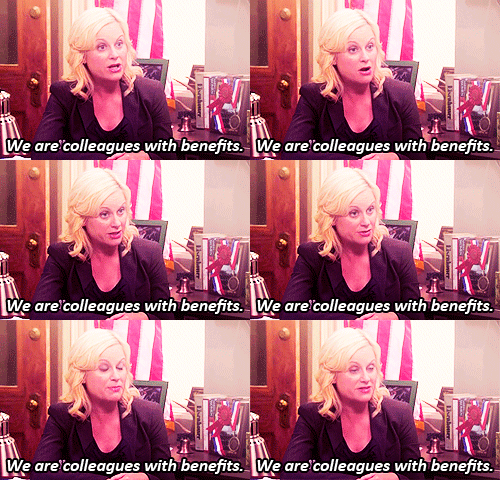
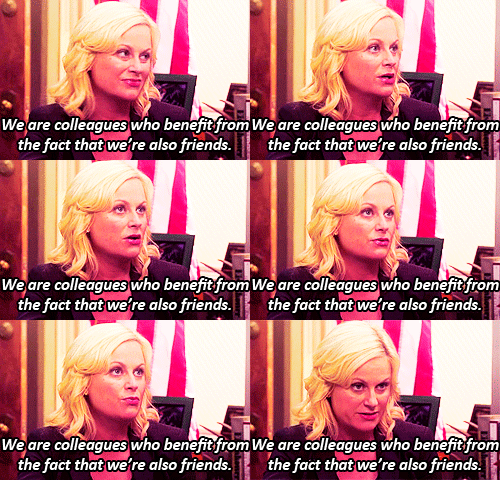
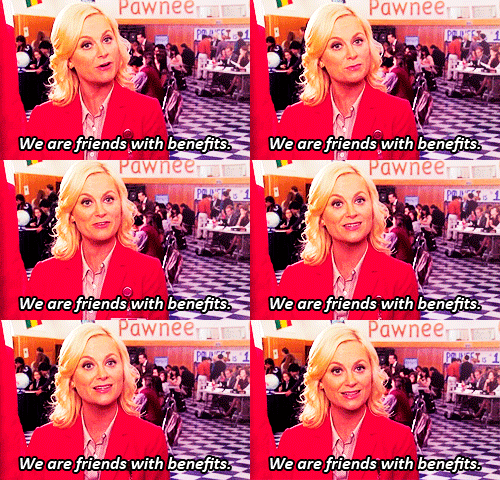
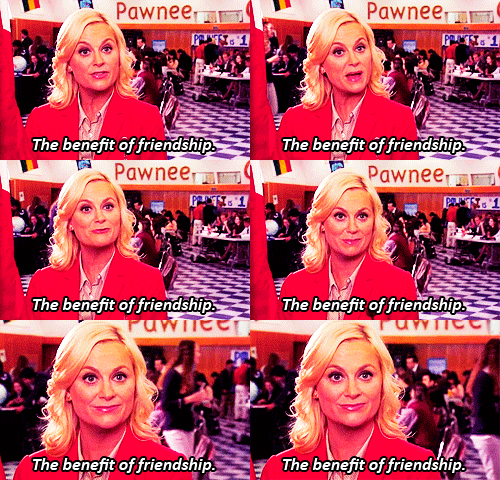
In perfect contrast to Leslie Knope, Ron Swanson, played by Nick Offerman, is a mustache wearing, wilderness loving, manly man. Ron, the director of the Parks and Recreation department is a libertarian and believes in as little government as possible. The irony of this character is further portrayed by his relationships with women. Ron Swanson can eat all the bacon and eggs you have but when it comes to his ex-wife, Tammy number one or his other ex-wife, Tammy number two, he is whipped. Ron and Leslie’s friendship is an example of crushing gender stereotypes throughout the series. Ron has no problem with strong women, in fact, he is attracted to them while Leslie is not intimidated by Ron’s masculinity but she isn’t too proud to seek his advice either.

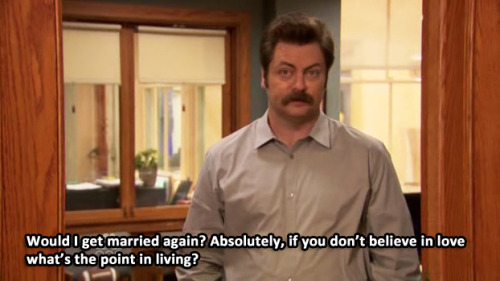
Parks and Recreation dedicated the majority of one recent episode solely to address the issues of gender equality by overdramatizing Leslie’s feminist ideals and Ron’s masculine standards. In this episode, the two characters are leaders for a boy/girl scouts-like group of children. Ron and the Rangers boys are focused on learning survival skills and how to live in the wilderness but much to the boys dismay, they are not having as much fun as their counterparts, the Pawnee Goddesses who work together to earn badges for best blog or for cooking a homemade meal, making s’mores and having pillowfights.
Leslie created the Pawnee Goddesses because girls were not allowed in the Rangers and when one of the boys opts to leave the Rangers to join the Goddesses, Leslie turns him away. The girls question their leader and request a public hearing discussing Brown vs. The Board of Education. The result is that the boys are allowed to join the Goddesses and in the end, a new group is formed: the “most hardcore wilderness group,” for boys and girls who “march to the beat of their own drum, and made the drum themselves.”

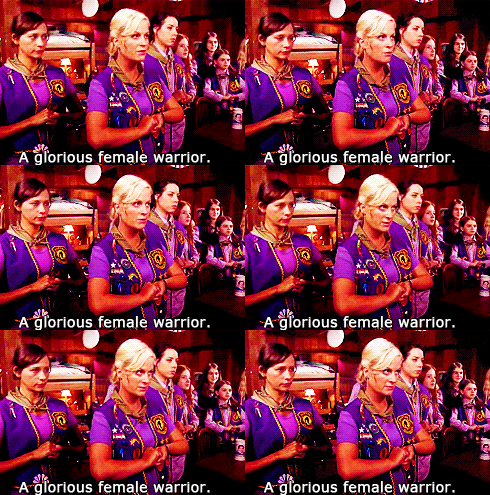

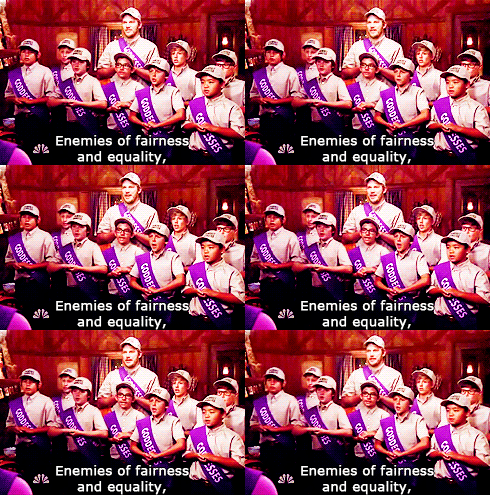
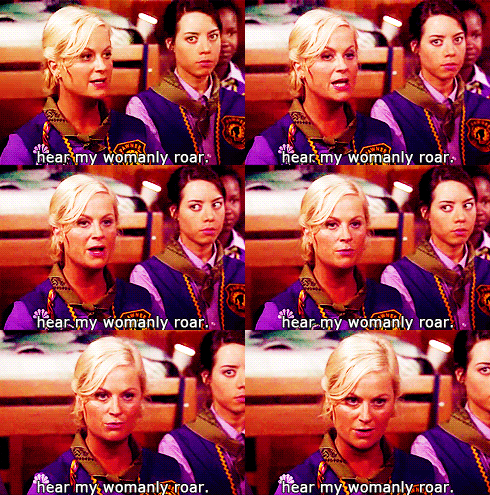


“This episode revealed some revolutionary concepts in the backwards world of girls on television: Girls can fish and play in the woods, and girls can throw a puppy party and a s’more competition. They can be smart and silly, tough and sensitive. They can be a Goddess and a Ranger. And boys can too—one of the best parts of this episode was that the boys weren’t afraid to join a group of Goddesses if it meant they could eat candy and hug puppies and hang out with their new friends. There was no flirting or rampant cooties, just kids having fun together” (Moshenberg).
The writers of Parks and Recreation shatter sexist stereotypes with clever irony and humor within just these two characters Ron and Leslie. What is so impressive about Parks and Recreation is that while it is a scripted, fictional sitcom, the characters showcase more easily identifiable traits than seen on most Reality Television, the mainstay of the mediums productions and the supposed mirror of ourselves. Not only does this show give you a belly full of laughs but it allows the audience to learn that people do not simply fall into a “type.” It is admirable and refreshing when someone can watch this show and be fully entertained while exposed to the complexities of individual personalities.
November 7, 2011
No Doubt- Just A Girl
Lyrics
Take this pink ribbon off my eyes
I'm exposed
And it's no big surprise
Don't you think I know
Exactly where I stand
This world is forcing me
To hold your hand
'Cause I'm just a girl, little 'ol me
Don't let me out of your sight
I'm just a girl, all pretty and petite
So don't let me have any rights
Oh...I've had it up to here!
The moment that I step outside
So many reasons
For me to run and hide
I can't do the little things I hold so dear
'Cause it's all those little things
That I fear
'Cause I'm just a girl I'd rather not be
'Cause they won't let me drive
Late at night I'm just a girl,
Guess I'm some kind of freak
'Cause they all sit and stare
With their eyes
I'm just a girl,
Take a good look at me
Just your typical prototype
Oh...I've had it up to here!
Oh...am I making myself clear?
I'm just a girl
I'm just a girl in the world...
That's all that you'll let me be!
I'm just a girl, living in captivity
Your rule of thumb
Makes me worry some
I'm just a girl, what's my destiny?
What I've succumbed to Is making me numb
I'm just a girl, my apologies
What I've become is so burdensome
I'm just a girl, lucky me
Twiddle-dum there's no comparison
Oh...I've had it up to!
Oh...I've had it up to!!
Oh...I've had it up to here!
October 17, 2011
The Secret of Womanhood
Throughout the history of mankind, womankind have been keeping a deep dark secret. “The average woman will menstruate almost a quarter of her fertile life” and due to the social stigma put on menstruation, women have been ashamed of this naturally occurring process. In male dominated society, the unspoken topic of menstruation has remained a cause for anxiety in women. In many cultures and societies, a woman’s period has historically been viewed as taboo. Evident in religious texts and cultural traditions women were often secluded, thought of to be unclean or poisonous, not allowed to cook, touch plants, have sex, or sleep in the same room as a man during their period.
Although we now understand that biologically, menstruation is one of the woman's reproductive stages, this primitive regard towards menstruation has lead to women's internalized oppression. For example, even today in modernized western countries like the U.S., simply talking about menstruation is considered rude or even disturbing especially in the presence of men. Not surprisingly, this discomfort is reflected in advertisements for feminine hygiene products.
In the 1920’s, the invention of the disposable sanitary pad manufactured by Kotex faced many challenges in it’s initial presentation to the public. Early advertisements reflect how hesitant people were to simply refer to menstruation so much so that “the prototype ad in around 1920 was centered on men as seen in the tagline ‘To Save Men’s Lives Science Discovered [Kotex]’” which makes no reference to menstruation or what the product actually was.
In the 1940’s and 50’s, Kotex published puberty and menstruation booklets that sparked discussion between mothers and daughters. Although it seemed that having this discussion was becoming more acceptable it is still evident that during this time menstruation was a personal topic that should only be discussed privately. While Kotex was supporting communication between women, taglines in their advertisements such as, “Kotex has flat, pressed ends that never show…never give away her secret” still suggests that having your period is something to be embarrassed about and should be hidden.

In later decades, we see how advertisements reflect women’s position in culture. The rise of feminism is portrayed in advertisements by showcasing the average lives of independent women. Kotex ads in the 60’s and 70’s claiming, “Kotex is confidence” often feature high fashion-like photos. In the 80’s and 90’s, women are often portrayed as active members of society, usually seen playing sports, dancing, or working. These advertisements may seem to support the notion that the discussion of menstruation was becoming accepted in general society; however, they remain ambiguous. The obscurity of these ads are reflected in reality when on television or in movies during a discussion between characters, menstruation is often given a vague nickname like, “Aunt Flow” or “Crimson Tide.” This perpetuates the women’s embarrassment of menstruation.

It was only recently when the U by Kotex campaign aired a commercial that parodies feminine hygiene product advertisements of the past asking, “why are tampon ads so ridiculous?” Their website promotes education by allowing guests to ask questions anonymously with professional assistance as well as supporting peer outreach through discussion boards. This kind of advertising sells more than just products, it is selling morals and values. The U by Kotex campaign is battling the social stigma of having to purchase sanitary pads and similar products by allowing girls to design them, not only making girls feel more at ease but also making it fun. The website encourages girls to “break the cycle” by getting involved with Girls For A Change, an organization that is “empowering girls to create social change... [by] training hundreds of girls across the U.S. to change the conversation around periods and vaginal care. The trainings focus on breaking down myths and stereotypes around women’s health issues and giving girls the tools they need to enact change."
While it seems evident that history, regarding the social stigma put on menstruation, does repeat itself, it is also evident that now, the generation of women and girls of the information age are beginning to ignite social change. Hopefully soon the secret will be out and people, men included, will no longer feel ashamed or embarrassed but rather supportive and accept this naturally occurring physical process.
Although we now understand that biologically, menstruation is one of the woman's reproductive stages, this primitive regard towards menstruation has lead to women's internalized oppression. For example, even today in modernized western countries like the U.S., simply talking about menstruation is considered rude or even disturbing especially in the presence of men. Not surprisingly, this discomfort is reflected in advertisements for feminine hygiene products.
 |
| 1920's |
 |
| 1940' |
 |
| 1960's |
In later decades, we see how advertisements reflect women’s position in culture. The rise of feminism is portrayed in advertisements by showcasing the average lives of independent women. Kotex ads in the 60’s and 70’s claiming, “Kotex is confidence” often feature high fashion-like photos. In the 80’s and 90’s, women are often portrayed as active members of society, usually seen playing sports, dancing, or working. These advertisements may seem to support the notion that the discussion of menstruation was becoming accepted in general society; however, they remain ambiguous. The obscurity of these ads are reflected in reality when on television or in movies during a discussion between characters, menstruation is often given a vague nickname like, “Aunt Flow” or “Crimson Tide.” This perpetuates the women’s embarrassment of menstruation.

It was only recently when the U by Kotex campaign aired a commercial that parodies feminine hygiene product advertisements of the past asking, “why are tampon ads so ridiculous?” Their website promotes education by allowing guests to ask questions anonymously with professional assistance as well as supporting peer outreach through discussion boards. This kind of advertising sells more than just products, it is selling morals and values. The U by Kotex campaign is battling the social stigma of having to purchase sanitary pads and similar products by allowing girls to design them, not only making girls feel more at ease but also making it fun. The website encourages girls to “break the cycle” by getting involved with Girls For A Change, an organization that is “empowering girls to create social change... [by] training hundreds of girls across the U.S. to change the conversation around periods and vaginal care. The trainings focus on breaking down myths and stereotypes around women’s health issues and giving girls the tools they need to enact change."
While it seems evident that history, regarding the social stigma put on menstruation, does repeat itself, it is also evident that now, the generation of women and girls of the information age are beginning to ignite social change. Hopefully soon the secret will be out and people, men included, will no longer feel ashamed or embarrassed but rather supportive and accept this naturally occurring physical process.
October 12, 2011
Fantasy Power Woman for Young Girls
 |
| Amy Jo Johnson as Kimberly Hart (Pink Ranger) |
The numbers just worked out really well for me and my cousins when it came to assigning roles when we played Power Rangers. I was the only girl of five kids (at the time) so everyone got to be a certain Ranger and nobody was left out. OK, so the numbers didn't exactly work out well for my brother, the youngest of us all, who was stuck being the yellow ranger, a girl, but for me, it was perfect! Besides, I liked Kimberly for many reasons other than the fact that she was the designated girl of the group (after all, I had two to chose from, although I suppose it was bad enough for my brother having to be a girl, I don't think he could have handled being the pink girl).
Although she was probably supposed to be "girly," Kimberly was just as tough as the guys! Other than the fact that she wore pink all the time, she was pretty bad ass! She used her talent in gymnastics in her abilities to beat the villains. I mean, Jason (the Red Ranger) practiced his Karate everyday (fighting and defensive strategies) and Kimberly with her acrobatic skills could fight off Rita's minions just as well! She fought alongside the boys, drove around a giant mechanical pterodactyl, and balanced it all with school, a job, and a hobby. I think she was a great role model! I still think she is awesome.
Other than the fact that she could hold her own with the boys, I liked that she was still cute and feminine. I liked that her femininity was never portrayed as a detriment to her ability to contribute to the group. She was tough and smart and cute and nice all at the same time. And she was brunette! Personally, I felt like girls who were idolized by my friends were always Barbie doll blonds and since I have dark brown hair and eyes but I'm NOT Latina, I could never identify physically with girls in pop culture. Kimberly Hart was someone I could both identify with and someone I wanted to be more like. Girl Power!
Hail to the V (Opinion on Summer's Eve ad)
This commercial for Summer's Eve feminine hygiene cleansing wash and cloths doesn't really sound like it's advertising a feminine hygiene product. By using the term "it" in place of simply saying vagina makes the topic a bit ambiguous as if the fact that women have a vagina is some sort of mysterious secret. However, this ad portrays men throughout many generations fighting, battling, and dying for "it" so, I guess they've known about its existence the whole time. Surprise, women!
This ad does a good job executing the portrayal of powerful women but it is an example of the fantasy of power. We don't see Hilary Clinton or Rosa Parks telling women to clean their lady parts. Instead, we see a montage of women who have more of a sexually powerful reputation. Eve, known for committing original sin, Cleopatra, who had an affair with Antony, a Geisha, also known as a high end prostitute, and a queen gladly watching two men kill each other then giving the winner a very seductive glance are all shown lurking around and being rather passive whereas the men are engaged in epic battles. In fact, all of these femme fatales seem to be satisfied with themselves because they use their sexuality to control men. I mean, men are fighting for "it" like it's the freaking Holy Grail!
"So come on, ladies, show it a little love!" Men have been doing so much work forever for it, the least you can do is make it smell nice. That way, you can control the world!
October 11, 2011
Lose The Blubber (Advertising Effects On Culture)
The largest animal rights organization in the world, People for the Ethical Treatment of Animals (PETA) doesn't hold back when it comes to using shock value in their advertisements. They proudly expose companies who "mistreat" animals often using mock advertisements, produce informational videos using extremely graphic images, and they have been known to cause controversy with their many public protest demonstrations.
But these animal rights activists don't seem to care much for the ethical treatment of other humans.

PETA is all for the welfare of animals but what about women? This advertisement above is a blatant attack on women. Basically, they are insulting any woman who isn't a vegetarian by calling them a whale. Making women feel guilty is not a healthy way to promote weight loss, rather, it IS a great way to promote eating disorders.
PETA's advertising has shifted from promoting awareness of the unethical treatment of animals working with the sympathy of the public to forcing people to feel guilty and ashamed. This particular advertisement is perpetuating female stereotypes. According to PETA, consuming meat is a horrible offense and should be ashamed of. However, the marketing tactics PETA is using is also causing women to feel ashamed of their appearance. This billboard is telling women to "lose the blubber" by becoming a vegetarian; basically saying, if you eat meat you are fat and therefore are comparable to a whale. PETA, I would assume, would consider whales to be beautiful creatures who deserve a safe place to live. Why then are they using whales as a negative comparison to women? Essentially, with this ad, PETA has not only gotten women to question their morals but they are attacking their physical insecurities. They want people to give whales a safe environment to live in but in doing so, with this ad, they are harming the mental safety of women.
Most of the celebrity endorsers for PETA are proud to participate in their advertising campaigns but how does PETA treat their celebrities based on gender? Most of the celebrity endorsements I found on the internet feature an outstanding number of naked women quoted as rather doing anything naked than wearing fur. But these women are slim, young, white, sexy women. The male celebrities are usually found cuddling with their pets, fully clothed. Not only is this evidence of a gender bias but also a racial bias. PETA should be trying to appeal to everyone but it seems they are using the slim, young, white, sexy women in their marketing campaigns and a large portion of their members and fellow protesters are also slim, young, white, sexy women. According to Gloria Steinem in her article, Sex, Lies & Advertising, "the ad world often creates black and Hispanic ads only for black and Hispanic media" and PETA is playing right into Steinam's theory by mostly using the slim, young, white, sexy women in their mass audience campaigns.
Recently, PETA has announced that they will launch a porn website. According to The Huffington Post, PETA has said, "the aim of the site is to promote the organization's animal rights and vegan diet message, and reach a broader audience."
Sex sells. I get it. Advertisers have been using sex appeal in marketing for generations. In her article, Sexualized Images in Advertising, Jane Tallim says, "advertising often pushes the boundaries of good taste because of competition for 'eyeballs.' Any image that entices a reader to linger over an ad - whether tasteful or not - causes that person to remember the particular brand advertised. Even controversy can be effective in getting a brand or name into the public eye." But PETA is an organization that is supposed to promote a positive change in the minds of the public. Ethically, morally, the thoughts and actions of the public should be the target of their audience but they have instead decided to take revenge on people by objectifying them the same way animals have been objectified. The effects of PETA's marketing strategies are not aiming to show the public that animals are living creatures with feelings and emotions and raising animals up to a human level, instead, they are degrading people, particularly women, to an animal level.
But these animal rights activists don't seem to care much for the ethical treatment of other humans.

PETA is all for the welfare of animals but what about women? This advertisement above is a blatant attack on women. Basically, they are insulting any woman who isn't a vegetarian by calling them a whale. Making women feel guilty is not a healthy way to promote weight loss, rather, it IS a great way to promote eating disorders.
PETA's advertising has shifted from promoting awareness of the unethical treatment of animals working with the sympathy of the public to forcing people to feel guilty and ashamed. This particular advertisement is perpetuating female stereotypes. According to PETA, consuming meat is a horrible offense and should be ashamed of. However, the marketing tactics PETA is using is also causing women to feel ashamed of their appearance. This billboard is telling women to "lose the blubber" by becoming a vegetarian; basically saying, if you eat meat you are fat and therefore are comparable to a whale. PETA, I would assume, would consider whales to be beautiful creatures who deserve a safe place to live. Why then are they using whales as a negative comparison to women? Essentially, with this ad, PETA has not only gotten women to question their morals but they are attacking their physical insecurities. They want people to give whales a safe environment to live in but in doing so, with this ad, they are harming the mental safety of women.
Most of the celebrity endorsers for PETA are proud to participate in their advertising campaigns but how does PETA treat their celebrities based on gender? Most of the celebrity endorsements I found on the internet feature an outstanding number of naked women quoted as rather doing anything naked than wearing fur. But these women are slim, young, white, sexy women. The male celebrities are usually found cuddling with their pets, fully clothed. Not only is this evidence of a gender bias but also a racial bias. PETA should be trying to appeal to everyone but it seems they are using the slim, young, white, sexy women in their marketing campaigns and a large portion of their members and fellow protesters are also slim, young, white, sexy women. According to Gloria Steinem in her article, Sex, Lies & Advertising, "the ad world often creates black and Hispanic ads only for black and Hispanic media" and PETA is playing right into Steinam's theory by mostly using the slim, young, white, sexy women in their mass audience campaigns.
Recently, PETA has announced that they will launch a porn website. According to The Huffington Post, PETA has said, "the aim of the site is to promote the organization's animal rights and vegan diet message, and reach a broader audience."
Sex sells. I get it. Advertisers have been using sex appeal in marketing for generations. In her article, Sexualized Images in Advertising, Jane Tallim says, "advertising often pushes the boundaries of good taste because of competition for 'eyeballs.' Any image that entices a reader to linger over an ad - whether tasteful or not - causes that person to remember the particular brand advertised. Even controversy can be effective in getting a brand or name into the public eye." But PETA is an organization that is supposed to promote a positive change in the minds of the public. Ethically, morally, the thoughts and actions of the public should be the target of their audience but they have instead decided to take revenge on people by objectifying them the same way animals have been objectified. The effects of PETA's marketing strategies are not aiming to show the public that animals are living creatures with feelings and emotions and raising animals up to a human level, instead, they are degrading people, particularly women, to an animal level.
Subscribe to:
Posts (Atom)